Tsinghua University School of Economics and Management (Tsinghua SEM) has officially opened the fifth edition of its Global Executive Program in China (GEPC), welcoming a cohort of 50 senior executives from 22 nationalities and 25 work locations across Asia, Europe, the Americas, Africa and Oceania. The largest and most international class in the program's history reflects growing global demand for a rigorous, firsthand understanding of China's economy, innovation ecosystem and business environment.
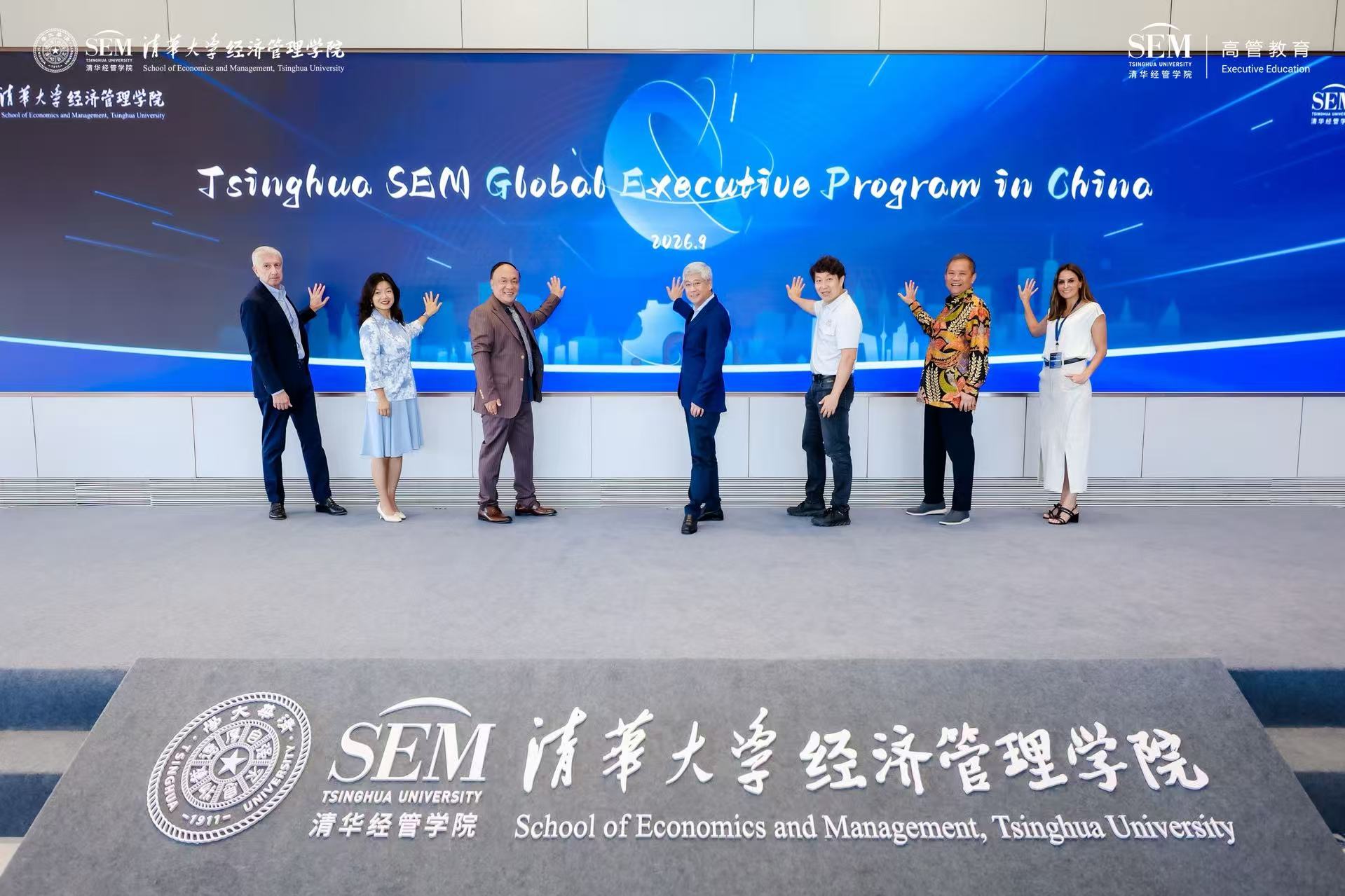
The opening ceremony of the 5th GEPC.
Professor Bai Chong-En, Dean of Tsinghua SEM, delivered the welcome address at the opening ceremony. Cohort representatives Rudiantara, Independent Commissioner of PT Vale Indonesia Tbk; Patricia Muratori, Managing Director of YouTube Latam at Google; and Paolo Bosani, Managing Partner of Expand Capital Partners, shared their expectations for the program. The ceremony was hosted by Di Ruipeng, Academic Director of GEPC. Also in attendance were Professor Huang Zhangkai, Co-Academic Director of GEPC; Li Jing, Director of the Executive Education Center; Tang Yunduan, Associate Director of the Executive Education Center; and Cheng Shaorong, GEPC Program Director.
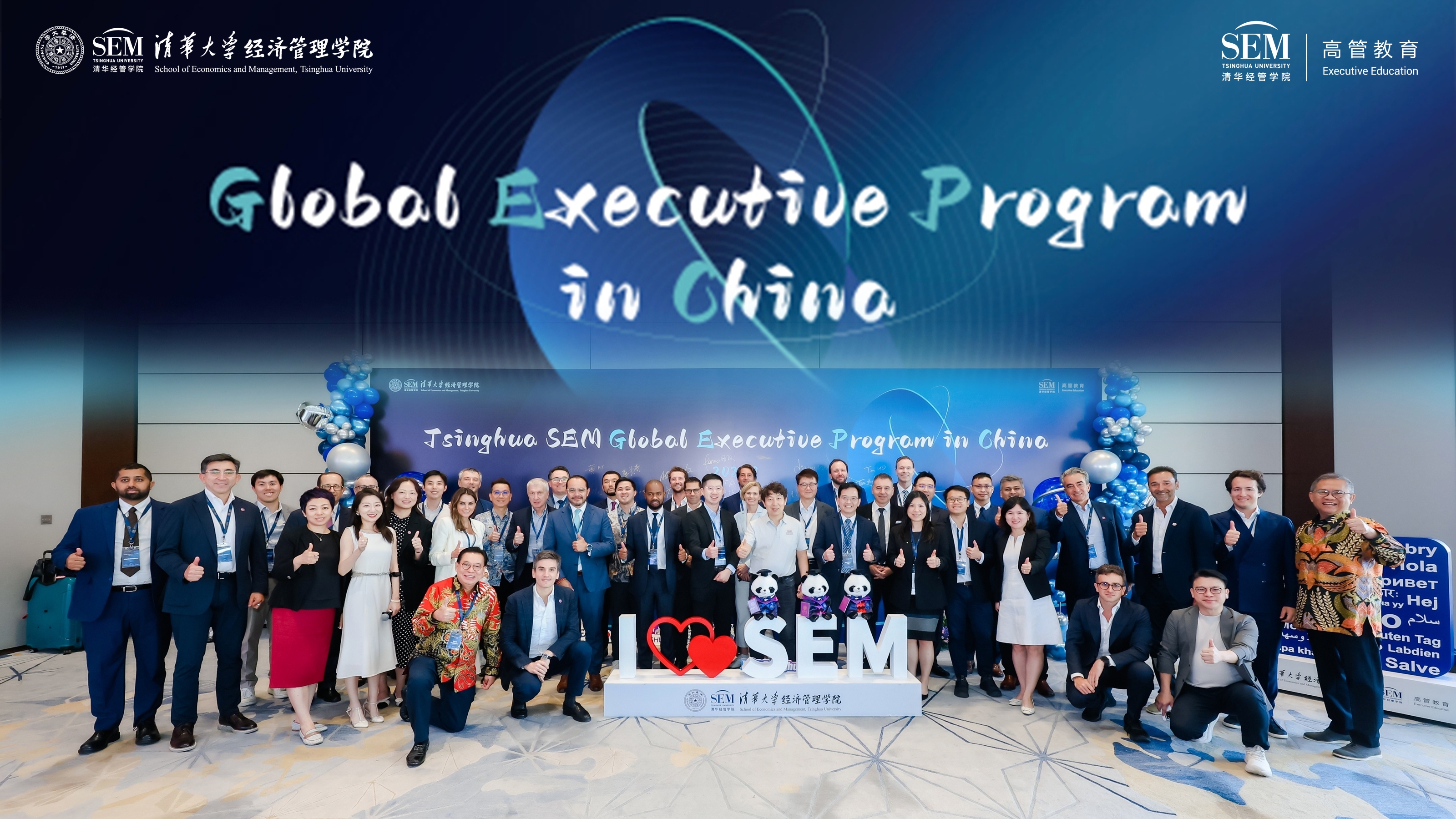
Participants pose for a photo at the opening ceremony of the 5th GEPC.
Launched in 2022 during the COVID-19 pandemic, GEPC has evolved from a small virtual gathering into a fully immersive, multi-city executive learning experience. In his opening remarks, Bai Chong-En encouraged participants to "come with questions, not conclusions," to engage fully in classrooms, company visits and peer discussions, and to take a long-term view of China's continuing transformation.
The 2026 cohort brings together senior leaders whose ages range from 25 to 67, with an average age of 47. Financial services is the largest industry group, representing 32 percent of the class, followed by participants from technology, energy and mining, professional services, research and development, and the public sector. Sixty-two percent hold a master's degree or doctorate, and nearly two-thirds serve in governance, ownership or executive leadership roles, including chairs, founders, partners, CEOs and C-suite officers.
Following a live-virtual orientation on August 26, the in-person module runs from September 2 to 16. The curriculum is organized around three connected educational threads – from macro to micro, from science and technology to business, and from urban to rural. Classroom instruction is integrated with case discussions, corporate visits, dialogues with policymakers and entrepreneurs, group work, participant presentations and cultural immersion. All sessions are conducted in English, with simultaneous interpretation provided for sessions delivered in Chinese.
In Beijing, the "Top-Down" module examines China's political and economic landscape, macroeconomic development, financial markets, entrepreneurship and the future of artificial intelligence. Participants will engage directly with China's strategic emerging industries, spanning intelligent robotics, new energy vehicles and biomedicine, gaining firsthand insight into the nation's innovation ecosystem and industrial upgrading.
In Jiangsu Province, the "Bottom-Up" module explores how entrepreneurship, effective governance, integrated value chains and manufacturing clusters drive high-quality regional development. Participants will visit leading enterprises in advanced manufacturing and green technology, covering sectors from new energy and digital technology to high-end equipment, while engaging in in-depth dialogue with local officials and entrepreneurs and studying best practices in rural revitalization.
In Shanghai, the "Fusion" module turns to global finance, foreign investment, market access, Chinese-style leadership, compliance, risk governance and supply-chain diversification. The program includes visits to core international financial and capital market institutions, as well as pioneering enterprises in the digital culture industry, culminating in group presentations and a closing ceremony.
Together, the three modules are designed to move participants beyond secondhand narratives and into direct engagement with the policymakers, industry pioneers and local practitioners shaping China's development.
Source: Executive Education Center
Editor: Ren Zhongxi

 Latest News