Bob Sternfels, global managing partner of McKinsey & Company and member of the Advisory Board of Tsinghua University School of Economics and Management (Tsinghua SEM), visited Tsinghua SEM to deliver a lecture on "Personal Operating Models" on October 14, 2026.
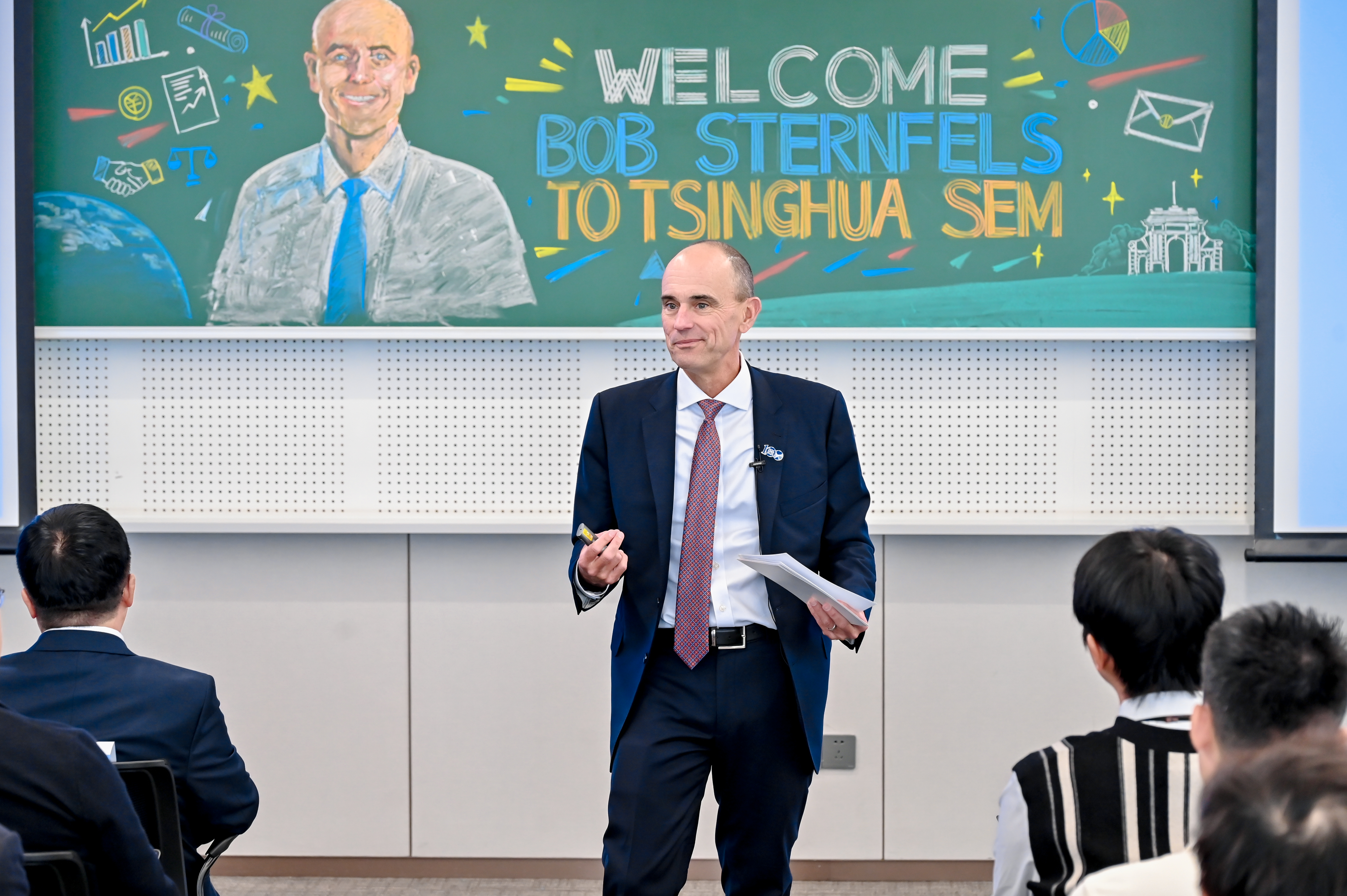
Bob Sternfels delivers a speech to Tsinghua Students.
Sternfels first introduced the theme of his talk to the more than 100 MBA students in attendance with the metaphor of "leaders as athletes." His observations were drawn from his years of in-depth exchanges with top executives around the world – those who sustain high performance under heavy responsibility tend to maintain a deliberately cultivated, personal set of methods and habits, he said. Continuously managing one's physical and mental condition like an elite athlete, and building a personal "high-performance operating model," is becoming a shared imperative for today's outstanding leaders, he added, and the challenges facing leaders today are far more complex than those of the past. Sternfels said that only by mastering the art of managing oneself early can one remain composed and sustainable under greater responsibility. He urged students to build such routines on day one, rather than wait until they became leaders.
He outlined "three pillars" of this CEO operating model. The first is the mindset of a champion: leaders should shift from being know-it-alls to learn-it-alls, carve out time to learn outside their own field, and cultivate earned optimism – a grounded, realistic outlook that turns current reality into a vision of what is achievable. He also highlighted humor as a powerful tool for breaking down organizational hierarchy and democratizing problem-solving.
The second pillar is building operating-system muscle. Effective leaders proactively manage their time by preserving unstructured space for creative thinking, and generate energy in every session, Sternfels said, adding that every moment has to be an "exothermic moment." He suggested a weekly self-check on whether the week had given more energy than it had taken, as a way to intentionally adjust the calendar ahead. Resilience, he added, should be treated as a muscle that is trained systematically by analyzing mistakes and turning them into competitive advantage – rather than by erecting defense mechanisms or explaining them away.
The third pillar is developing a team ecosystem. Sternfels drew a distinction between managers, who supervise people and instruct them on what to do, and leaders, who inspire and set aspirations. He advised students to act as chief enrollment officers, motivating teams by painting a vivid picture of the destination rather than merely dictating the pace of work. He also stressed that leaders must have a coachable mindset – willing to admit they need help, open to candid feedback, and ready to use it to test new approaches.
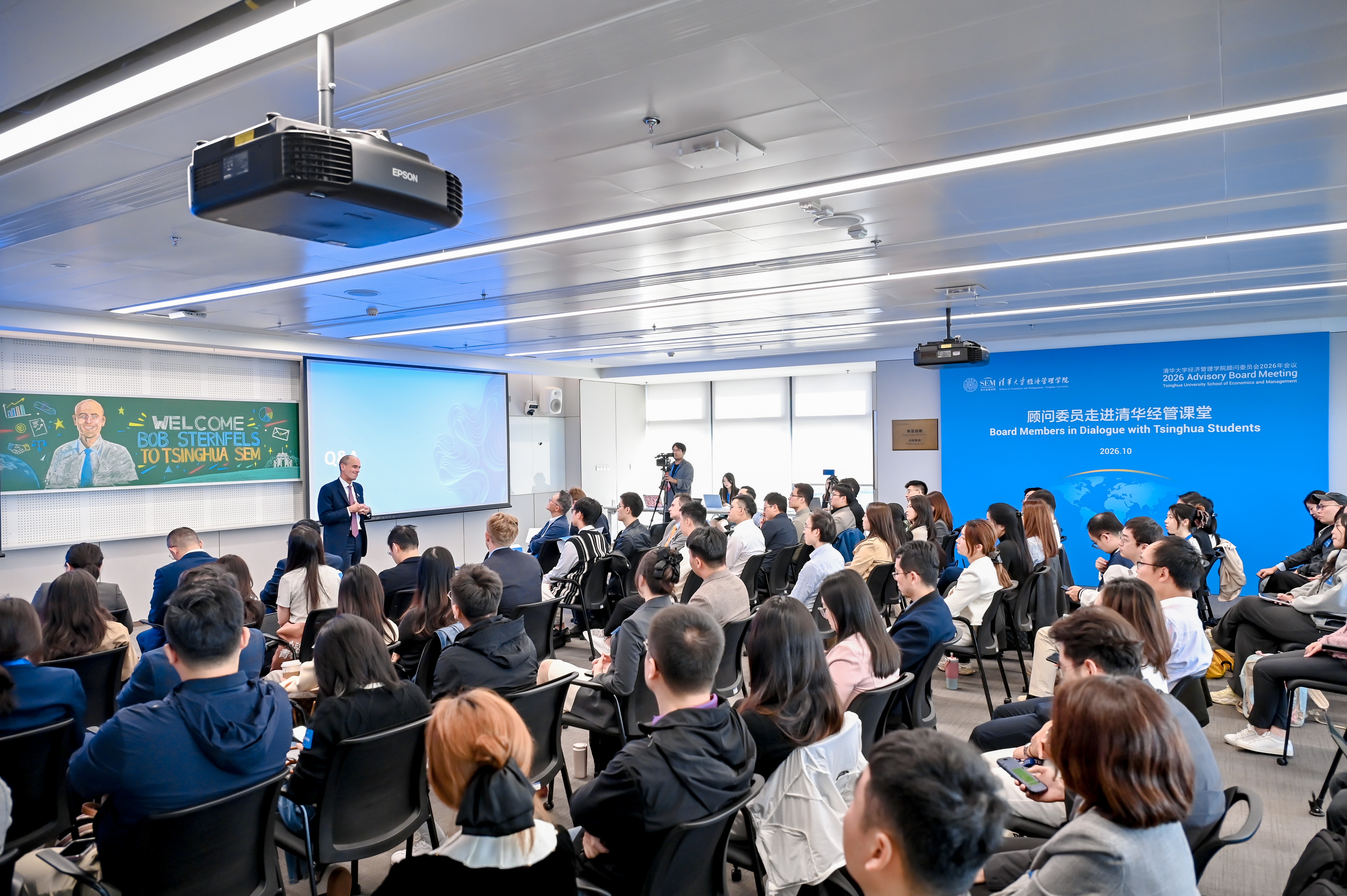
Bob Sternfels answers questions from the students.
In the interactive Q&A session that followed, students engaged with Sternfels on topics including the impact of artificial intelligence on the consulting industry and on leadership, talent development and retention, and career opportunities for female leaders. On industry transformation, he candidly observed that the value of leadership has become more, not less, prominent: in the face of an increasingly complex business environment, a stable and sustainable "operating system" is precisely the foundation that enables leaders to navigate uncertainty and move their teams forward. He said that rather than fixating on "retention," companies would do better to think about how to keep talent continually "re-enrolled"; women, meanwhile, still face considerable challenges in career advancement, and equal opportunity requires the combined support of institutions and the broader environment. Sternfels encouraged students to regard their current studies and experiences as an important part of building their own "operating system." Joe Ngai, chairman of McKinsey Greater China, offered supplementary perspectives drawing on his experience in the Chinese market.
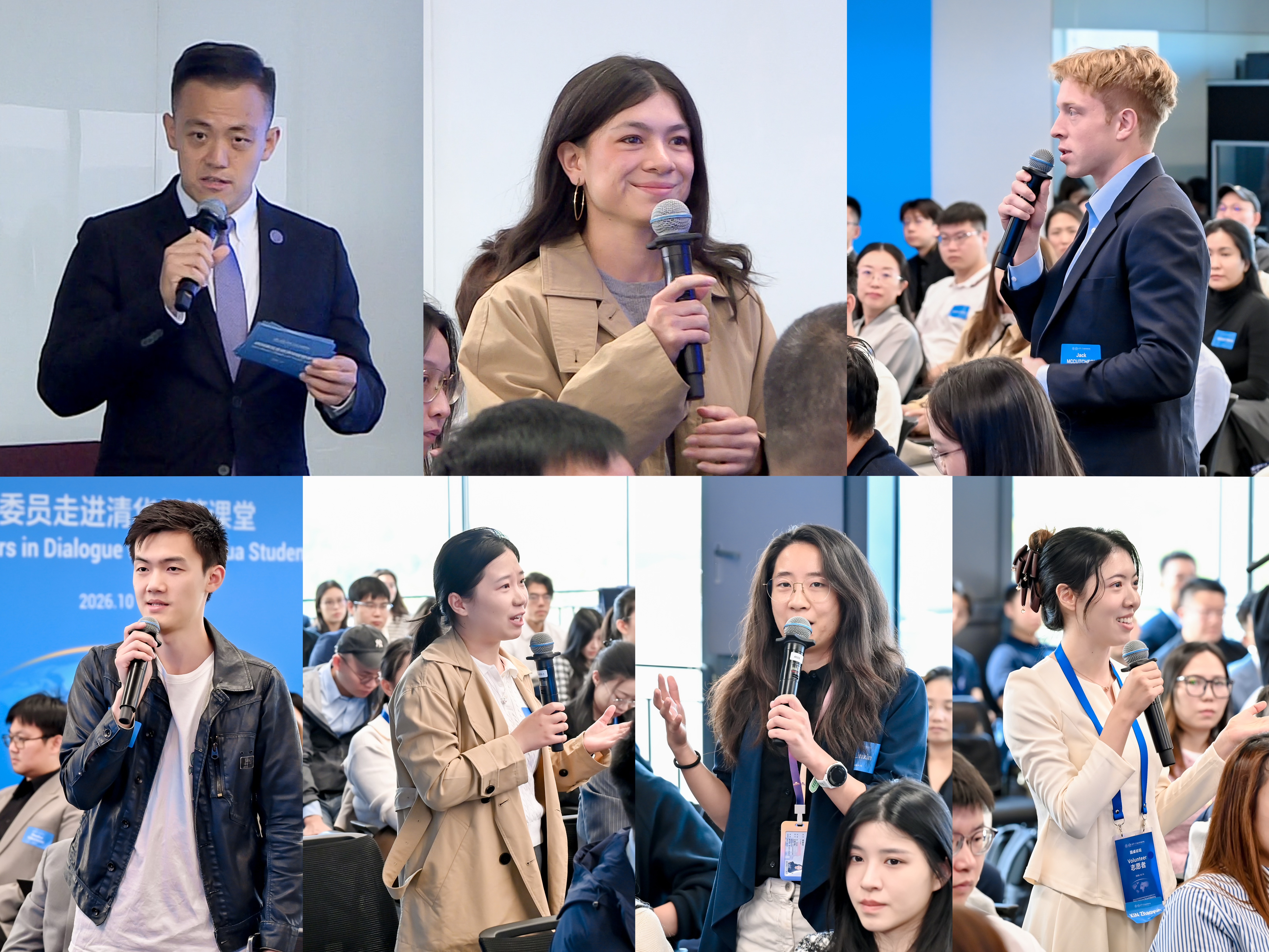
Q&A session
As a token of appreciation, the students presented Sternfels with a live-drawn portrait. A postdoctoral fellow from the Tsinghua University Academy of Arts and Design rendered the portrait on site using traditional Chinese ink-and-color techniques. The gift, embodying the students' respect and gratitude, brought the sharing session to a warm and memorable close.
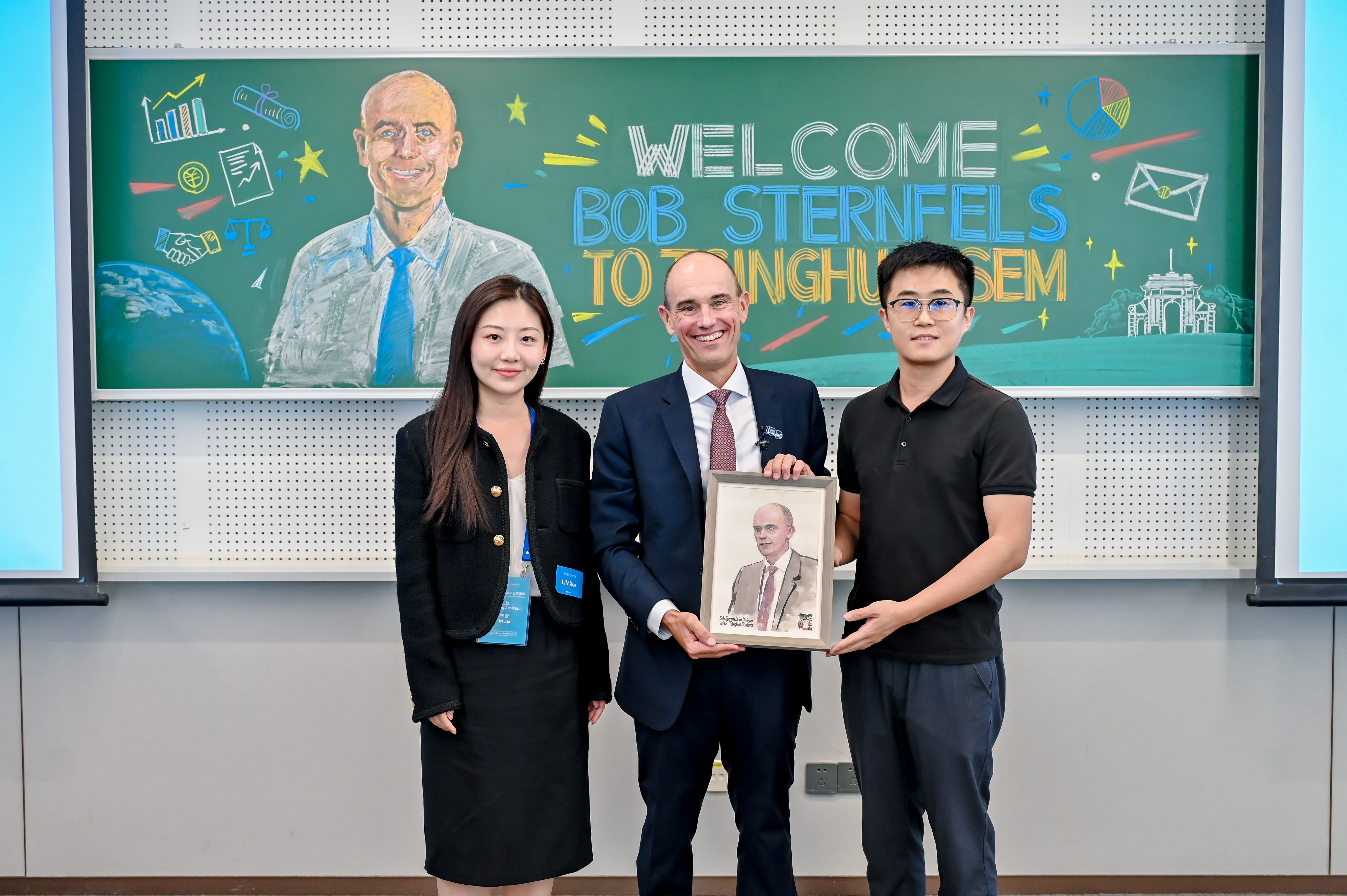
Tsinghua students present a gift to Bob Sternfels
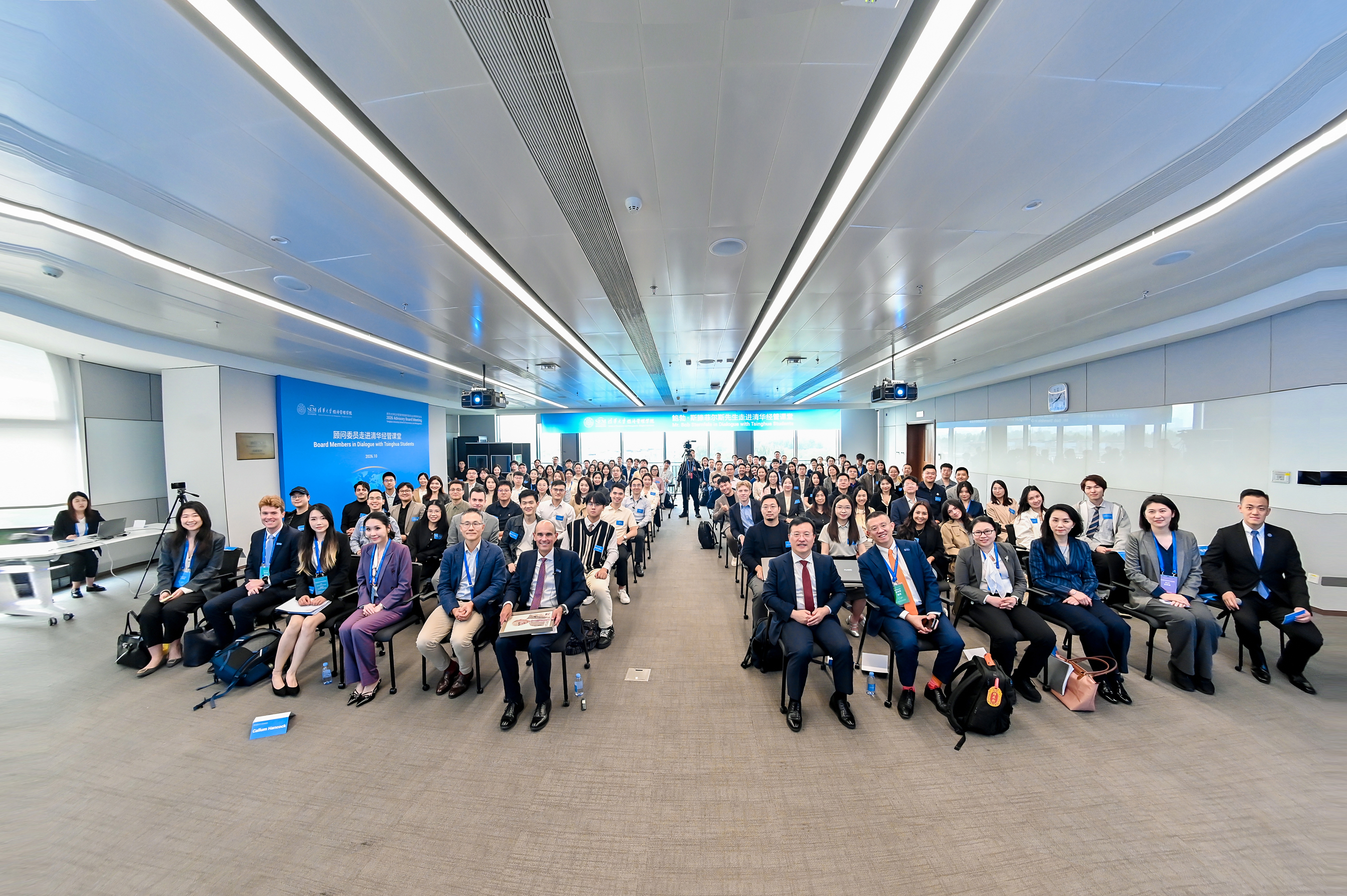
Participants pose for a group photo.
Source: MBA Programs
Editor: Ren Zhongxi

 Latest News